Air, water, wind: how to read performance classification
Air permeability, watertightness, and wind resistance classifications describe real-world performance — here is how to read them.
June 13, 2026 / 4 min read
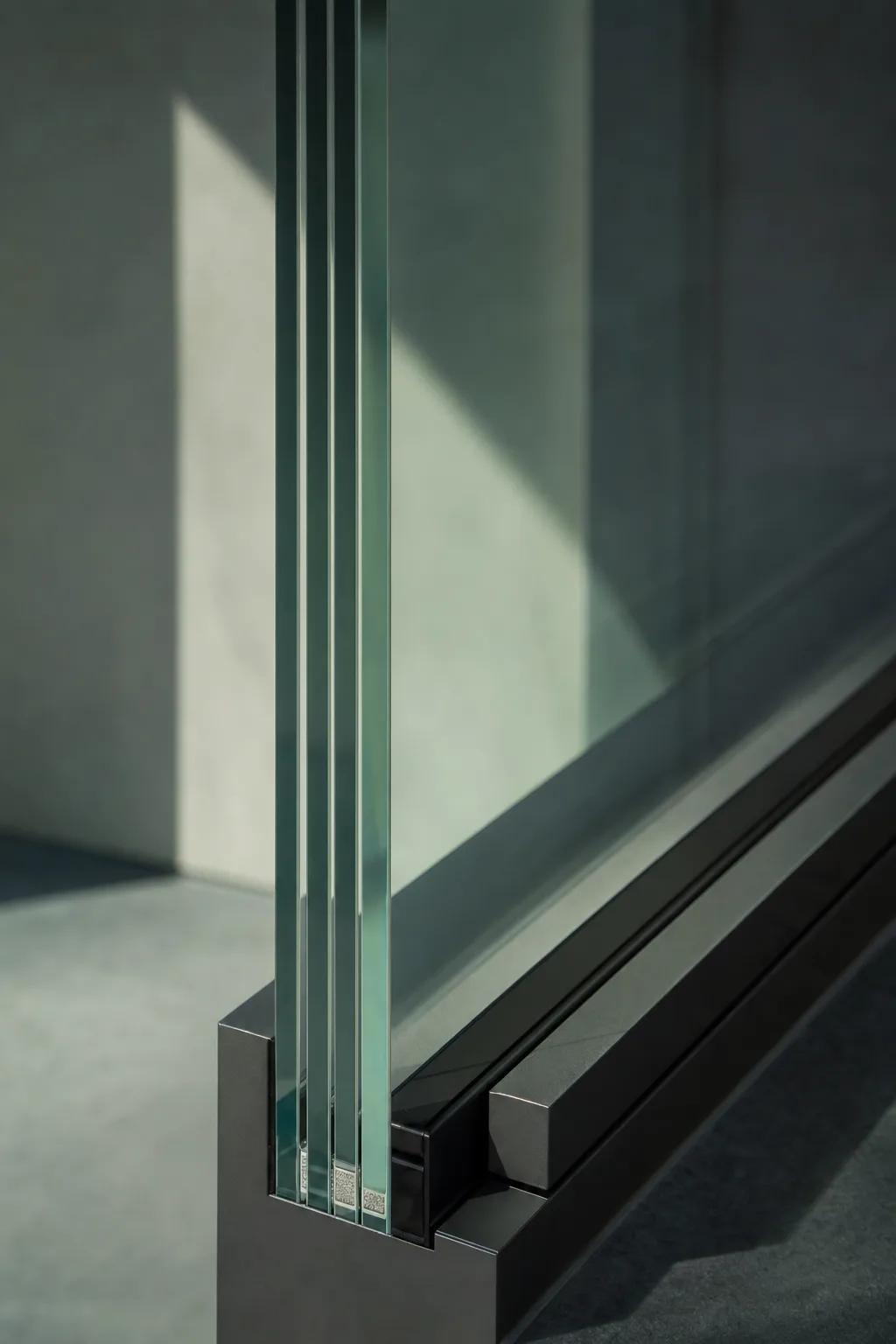
Air permeability, watertightness, and wind resistance classifications describe real-world performance — here is how to read them.
June 13, 2026 / 4 min read
When reading a window specification sheet, three parameters often get a quick glance before being set aside: air permeability class, watertightness class, and wind resistance class. These are the measures through which European standards describe the fundamental mechanical performance of a window or door-window system. They go well beyond their regulatory context. They describe how a window actually behaves in real use, in every season, over time.
Reading them with awareness does not require deep technical training. It requires understanding what they measure, why they matter, and how they relate to the overall quality of the window system.
Air permeability measures the volume of air that passes through a closed window under a defined pressure. It is expressed in ascending classes: the higher the class, the lower the permeability, and therefore the more effective the seal. Class 4 represents the highest level in the European classification and indicates very high airtightness — appropriate for high-performance buildings.
In practical terms, low air permeability means fewer unwanted draughts, less thermal dispersal through the joints, and less noise penetrating through frame edges. It means the window does its job when closed: not just a visual barrier, but a genuine physical boundary between inside and outside. This performance depends on profile quality, precision of the perimeter seal, hardware adjustment, and installation competence — not on the product alone.
Watertightness describes a window's ability to resist wind-driven rain under dynamic pressure. It is measured in classes indicating the maximum pressure withstood without water ingress. This is not an extreme scenario: on an exposed façade, an insufficiently rated window may show infiltration during medium-intensity weather events, with consequences that progressively damage the wall-window joint, the subframe structure, and interior finishes.
A high watertightness class is particularly relevant for buildings in exposed contexts: coastal areas, higher elevations, or facades open to dominant winds. But even in more sheltered urban situations, adequate watertightness is a quality prerequisite that should not be overlooked at the design stage. System selection must always be coordinated with the local climate context and the position of the window within the building envelope.
Wind resistance measures the ability of the sash and frame to withstand the pressures and suctions generated by wind without excessive deformation or loss of functionality. In large glazed systems — significant sliding lift-and-slide units, multi-track glass walls — this parameter becomes critical: large-format sashes, with thick insulating glass and substantial weight, must maintain their geometry under load so as not to compromise the other two performance classes or long-term operability.
Wind resistance is not solely a function of the profile: it depends on hardware quality, the structural bonding of the glass, sash rigidity, and once again on installation quality and on-site adjustment. In sliding systems, the pair of adjustable carriages is a key technical element for maintaining stable performance over time on heavy sashes.
Performance classifications are not absolute values detached from project conditions: they always need to be read in relation to the specific context. A window specified for an inland urban location in a temperate climate faces different demands than one installed on a seafront building exposed to salt air and sustained wind. The appropriate classification for each situation is the result of a dialogue between the design team, the window manufacturer, and the installation professional — not a figure to be selected from a table without analysis. This is one of the reasons why a systems approach, which considers product, installation, subframe, and context as a whole, produces more reliable and durable results than selecting individual components in isolation.
PURASISTEMI systems are designed to achieve high-level performance across all three classes, with particular attention to large dimensions and sliding configurations. Actual performance always depends on project specification, configuration, and installation quality. To learn more, visit purasistemi.com.
PURASISTEMI is a Fasal Lab brand
Via delle industrie 8
30020 Eraclea
Venice - Italy
commerciale@purasistemi.comwww.purasistemi.comFollow us:
InstagramFasal Lab srl - IT 04725180279
Privacy PolicyWebsite Design: Factory42 - Development: MOBA Digital Studio