The European Green Homes Directive: what it means for windows and doors
The EPBD is reshaping expectations around the building envelope — and placing windows and doors back at the heart of quality design.
June 13, 2026 / 4 min read
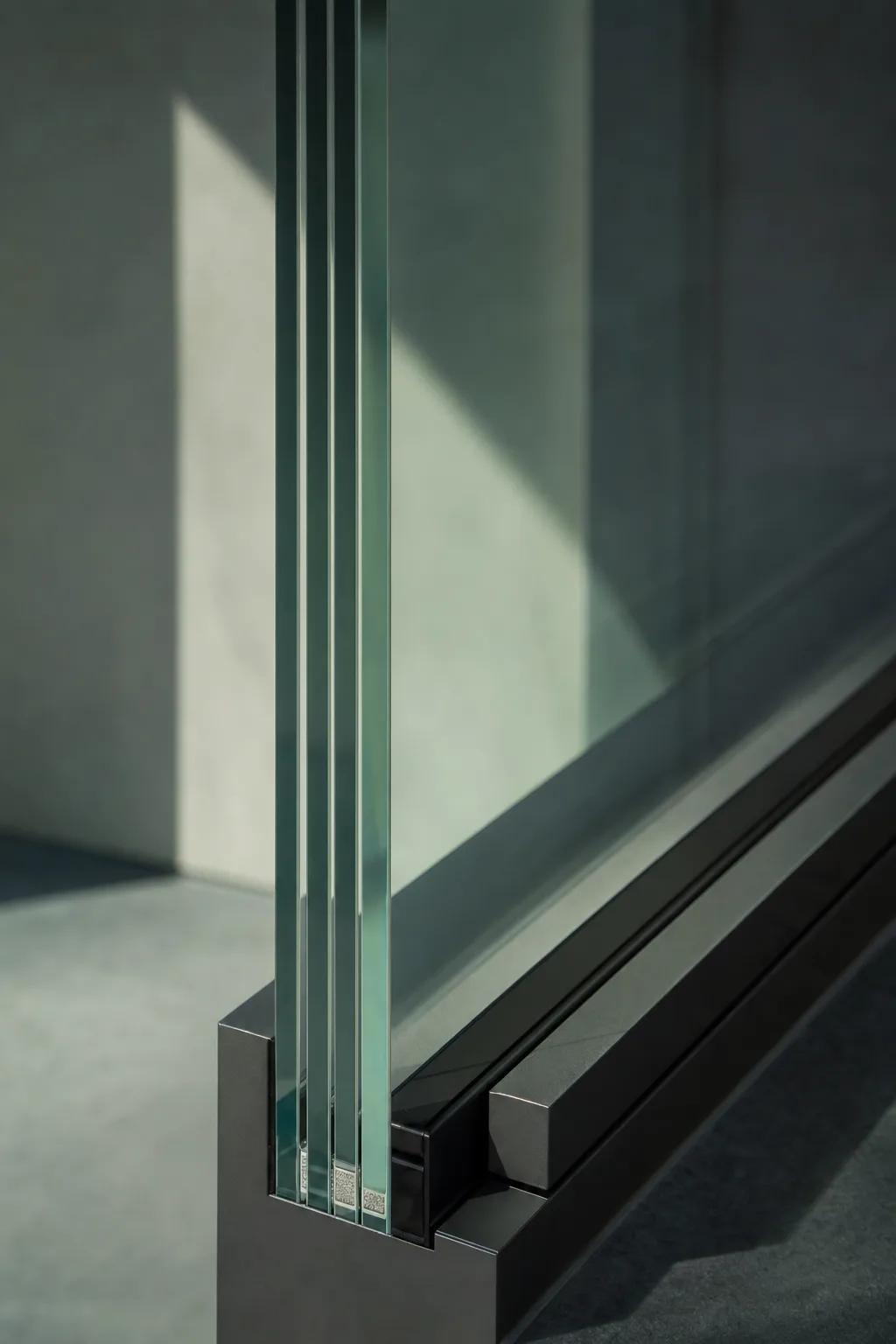
The EPBD is reshaping expectations around the building envelope — and placing windows and doors back at the heart of quality design.
June 13, 2026 / 4 min read
Something is shifting in the way Europe thinks about buildings. It goes beyond energy consumption in the narrow sense — it concerns the quality of the spaces we live in, and the relationship between the building envelope and everyday comfort. The European Energy Performance of Buildings Directive, widely known as the EPBD or, in public discourse, as the Green Homes Directive, establishes a long-term framework for the construction sector. It calls for the progressive reduction of energy consumption across the European building stock, along with increasingly demanding performance requirements whenever significant renovation works are carried out.
For those who design, build, or inhabit quality spaces, this is not an abstract constraint. It is an invitation to consider where energy is lost, where comfort can be gained, and where technical detail genuinely makes a difference.
Windows and doors are the most direct interface between inside and outside. They are the surfaces through which most thermal exchange occurs in a building — not only in winter, when interior heat seeks to escape, but also in summer, when solar radiation enters and warms interior spaces. Any renovation project aiming to improve overall building performance cannot overlook a careful assessment of existing window and door quality and the most appropriate replacement strategy for the specific context.
In this sense, the EPBD confirms an existing priority rather than creating a new one. The building envelope — walls, roof, floor, and windows — has always been the primary layer in any energy-efficiency strategy. What changes is the urgency of the regulatory framework and the growing market demand for solutions that combine certifiable performance with tangible living quality.
A new-generation window system is not assessed solely on thermal transmittance, even if this parameter remains fundamental. It must be evaluated as a whole: air permeability, resistance to wind and rain, acoustic insulation, light transmission, solar factor, long-term material durability, and the quality of installation. Together, these factors determine both the real energy performance of a building and the indoor comfort experienced by its occupants — not just the declared figures on a specification sheet.
The directive requires that significant renovation works meet increasingly stringent performance thresholds. Each intervention therefore becomes an opportunity to raise overall quality: to choose a window system that meets regulatory expectations while, at the same time, genuinely improving the quality of life for those who inhabit the space. The performance and aesthetic goals are not in conflict — they can and should coexist.
Across the window market, the difference between a product that meets minimum requirements and a system that substantially exceeds them often lies in components that are invisible at first glance: the quality of the insulating glass unit, the type of spacer, the depth of the frame, the precision of the technical node, and the expertise of the installation team. Choosing an integrated system — product, subframe, glass, installation — means leaving nothing to chance in an intervention that will have lasting consequences for the building.
European regulation provides a clear direction. The most coherent response is not to do the bare minimum required for compliance: it is to seize the opportunity to invest in quality, comfort, and long-term value.
It is worth noting that the EPBD did not originate as a penalty for owners of inefficient buildings. It emerged from a shared vision: to progressively reduce the energy impact of the European building stock while improving the quality of life of those who inhabit it. In this sense, efficiency is not a constraint on architecture but an opportunity to rethink the envelope with greater awareness. A well-designed window system, integrated coherently with the structure, contributes to this goal without compromising the identity of the project.
PURASISTEMI systems are designed to meet this evolving landscape: thermally broken aluminium, triple glazing, structural bonding, and full thermal continuity. A systems approach that unites technical precision with architectural identity. Learn more at purasistemi.com.
PURASISTEMI is a Fasal Lab brand
Via delle industrie 8
30020 Eraclea
Venice - Italy
commerciale@purasistemi.comwww.purasistemi.comFollow us:
InstagramFasal Lab srl - IT 04725180279
Privacy PolicyWebsite Design: Factory42 - Development: MOBA Digital Studio