Species and Grain: Timber as a Design Material
Oak, larch, canaletto walnut, decapè: choosing the right timber species means building coherence between window and interior.
June 13, 2026 / 4 min read
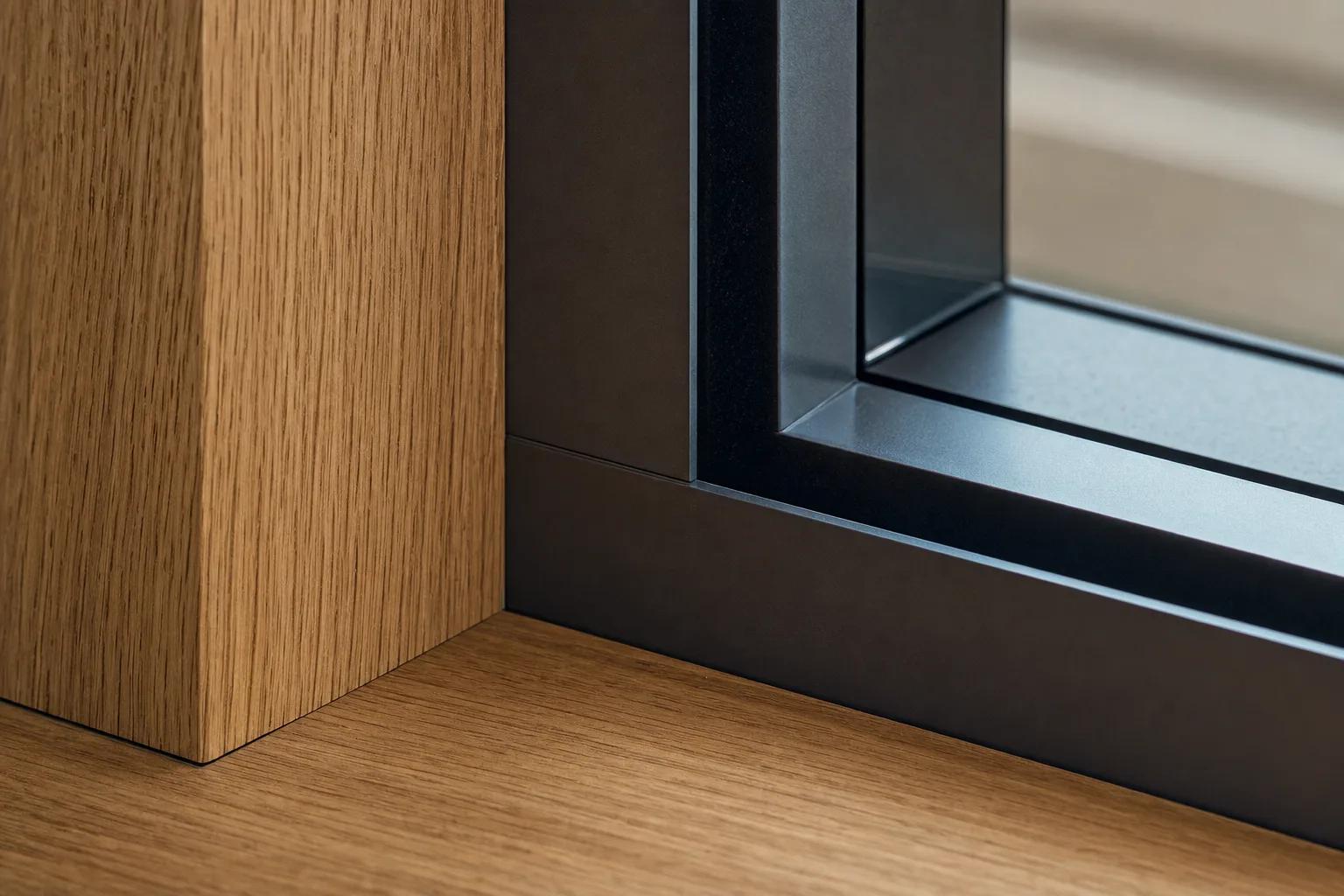
Oak, larch, canaletto walnut, decapè: choosing the right timber species means building coherence between window and interior.
June 13, 2026 / 4 min read
There is something timber does in interiors that no other material can replicate: it introduces variation. Not the random or uncontrolled kind, but the natural, organic variation that comes from how a tree grows — the grain that runs along the profile, the tone that shifts with the light, the texture that responds to the touch in ways no industrial surface can match.
When timber enters the window system as an interior cover, this variation becomes part of everyday architecture. It is not a decorative detail: it is a design decision with consequences for the entire visual composition of a space.
Oak is the most adaptable species in the range. In its Natural version, it brings warm, slightly golden tones with a wide, clearly legible grain that communicates solidity without heaviness. In the Terra version, it shifts toward deeper, more contemporary browns — at home alongside dark floors, concrete walls, or stone cladding. In the Anthracite version, the finish is almost monochromatic: the grey overlays the grain, creating a surface that retains the texture of timber but moves it into a more graphic and urban register. Decapè Weiss Oak, finally, bleaches and lightens the grain, producing a Nordic, luminous effect suited to interiors working with whites and light greys.
Four variations of the same species that cover a very wide range of visual registers: from contemporary classic to minimal Scandinavian, from industrial to urban residential.
Larch has a finer, tighter grain and a naturally lighter tone than oak. In its Natural version, it brings brightness to the interior, with a surface that captures and diffuses light differently from a uniform finish. Terra Larch shifts the tone toward warm, burnished hues, closer to earth and brick tones, suited to projects seeking continuity with natural materials and warm palettes. Anthracite Larch preserves the delicacy of the grain while reducing it beneath a layer of dark pigment — a result that is simultaneously textured and controlled.
Natural Canaletto Walnut is the species with the strongest character in the range. Pronounced grain, dark tones tending toward chocolate brown, a visual depth that immediately distinguishes the surface. It is a species that requires precise contexts — high-end interiors, bespoke furniture, dark timber or natural stone floors — but in those contexts it expresses a quality that is rare and difficult to achieve with any other finish.
The choice of timber species for the window cover is not an isolated decision. It is made in relation to the floor, the furniture, the wall coverings, and the overall interior palette. A natural oak in dialogue with a herringbone brushed oak parquet. An anthracite larch that picks up the tones of burnished iron in the furnishings. A canaletto walnut that establishes the warm, dark note around which the rest of the room is built.
It is worth noting that every timber species carries natural variation: grain patterns are not uniform from one piece to the next, tones shift slightly between batches, and the response to light is alive and changing. This is not an imperfection: it is precisely why natural timber brings to a space a presence that no industrial surface can replicate. The designer who works with timber learns to use this variation as a resource, not a constraint.
PURASISTEMI systems offer this range of timber species as a design tool, not as a catalogue of options. Each choice integrates within the magnetic cover system — installable and removable without touching the structure — maintaining coherence with the external aluminium profile and with the interior design as a whole. Explore the available species and PURASISTEMI systems at purasistemi.com.
PURASISTEMI is a Fasal Lab brand
Via delle industrie 8
30020 Eraclea
Venice - Italy
commerciale@purasistemi.comwww.purasistemi.comFollow us:
InstagramFasal Lab srl - IT 04725180279
Privacy PolicyWebsite Design: Factory42 - Development: MOBA Digital Studio