Material Finishes: Surface as a Tactile Experience
Matte, textured, electrocolour surfaces: the role of finish in contemporary design extends well beyond colour selection.
June 13, 2026 / 4 min read
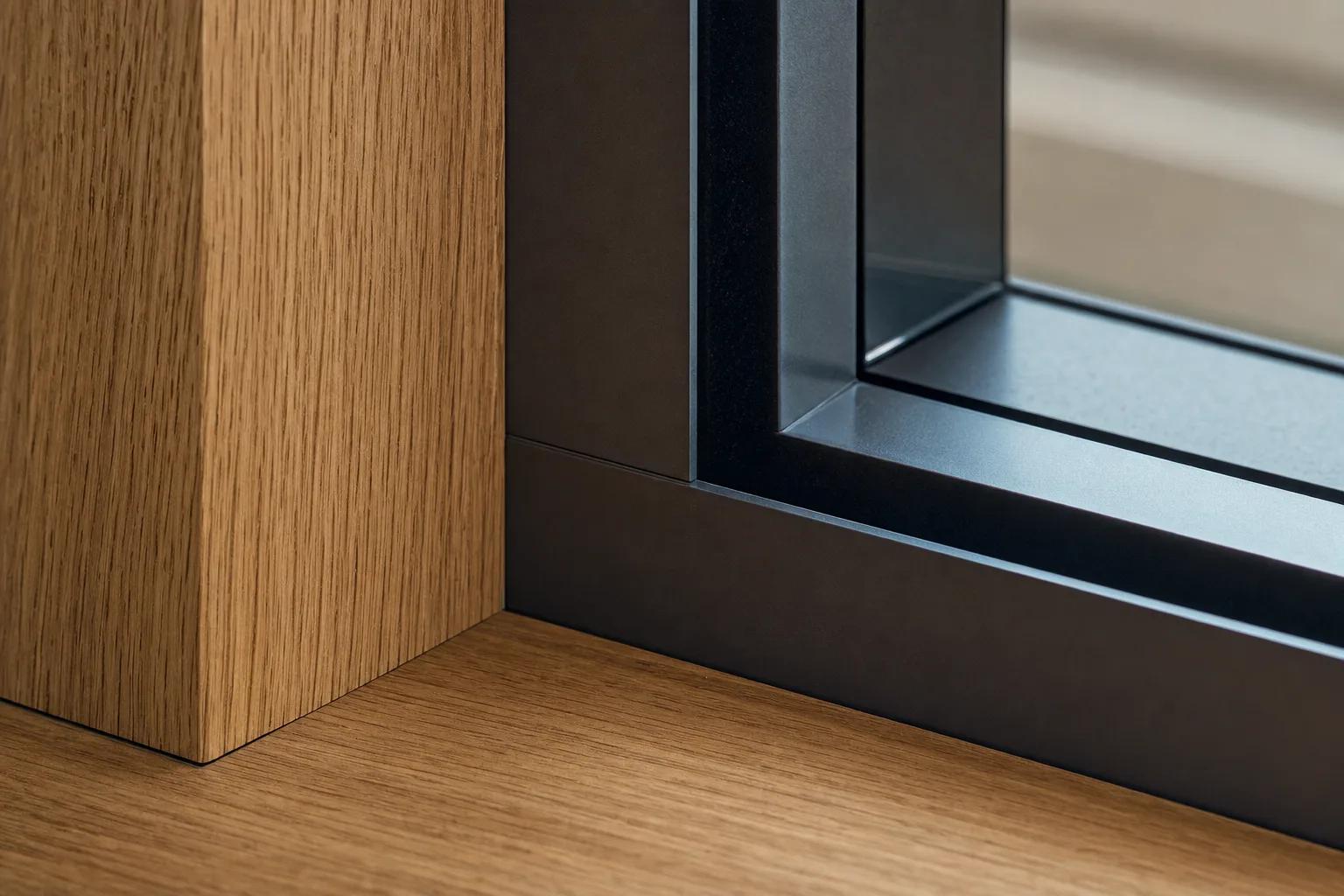
Matte, textured, electrocolour surfaces: the role of finish in contemporary design extends well beyond colour selection.
June 13, 2026 / 4 min read
Surface matters. Not only as a colour on a swatch card, but as a physical experience: the way light strikes a matte profile is different from the way it reflects off a gloss surface. The way the hand perceives a textured finish is different from how it perceives a smooth lacquer. These are not marginal details — they are dimensions of design that shape the perceived quality of architecture.
At a moment when industry trends point to growing interest in matte, textured, and material surfaces, the choice of window finish has become an increasingly deliberate design decision.
Aluminium is a material that lends itself to very different surface treatments. It is not inherently glossy or matte, warm or cold: it is the process that defines the character of the surface. In electrocolour finishes, the colour is applied through electrochemical deposition, producing a uniform surface that is stable over time, with a characteristic visual depth that distinguishes it from conventional paint. In structured finishes, the surface is worked to create micro-reliefs that modify the reflection of light and give the profile an evident tactile presence — a texture that is both seen and felt.
Grigio Micaceo carries a particulate, almost mineral quality. Corten 360 evokes the appearance of oxidised metal without the maintenance demands of authentic corten. The 9016 Textura finish brings classic white into a structured version — less immediate and more architectural. The ability to specify any colour from the RAL palette — in both smooth and available structured variants — opens a compositional freedom that allows the window to be calibrated to the specific palette of the envelope.
Even in the interior dimension of the window system, the lacquered finish is not a neutral choice. A smooth, uniform lacquer creates a sense of continuity with the walls — in more minimalist interiors, it almost makes the window disappear. A finish applied to a structured substrate — such as brushed fir, which the project documentation indicates as the basis for a more material finish — introduces a visible texture into the interior space, a mark that allows the window to participate actively in the surface system of the interior.
The available tones in lacquered covers — from soft white to anthracite grey, from warm brown to absolute black — cover the palettes most in demand in high-end residential design: RAL 9016 white for luminous and minimal interiors, 7021 dark grey for more contemporary and graphic projects, 8019 brunished for spaces that seek warmth and depth, 9005 matte black for maximum contrast and formal clarity.
One of the most compelling possibilities in the range is the two-tone finish: exterior in aluminium calibrated to the facade, interior with a timber or lacquered cover in the tone of the interior scheme. This independence between the two faces of the window is a precise response to one of the most frequent challenges in residential design — reconciling the demands of the external envelope (which must speak to facade, context, and architectural materials) with those of the interior (which has its own palette, its own materials, its own identity).
Two-tone is not a compromise: it is a system solution that allows the designer to work across two scales simultaneously, without one necessarily conditioning the other.
In architecture, surfaces build the identity of a space as much as proportions and light do. An ill-chosen finish can undermine a carefully composed system; the right finish consolidates and enriches what the project intends to communicate. The window, within this system of relationships, is not a neutral element: it has surface, texture, a relationship with light and with touch.
PURASISTEMI systems offer a range of finishes designed to meet this awareness: from the choice of electrocolour to structured aluminium finishes, from lacquered covers to timber species, every option is selected as a design tool. Explore the full range of finishes at purasistemi.com.
PURASISTEMI is a Fasal Lab brand
Via delle industrie 8
30020 Eraclea
Venice - Italy
commerciale@purasistemi.comwww.purasistemi.comFollow us:
InstagramFasal Lab srl - IT 04725180279
Privacy PolicyWebsite Design: Factory42 - Development: MOBA Digital Studio