Energy renovation: why the envelope comes first
Every quality renovation starts where energy is lost: at the building envelope, and at the windows.
June 13, 2026 / 3 min read
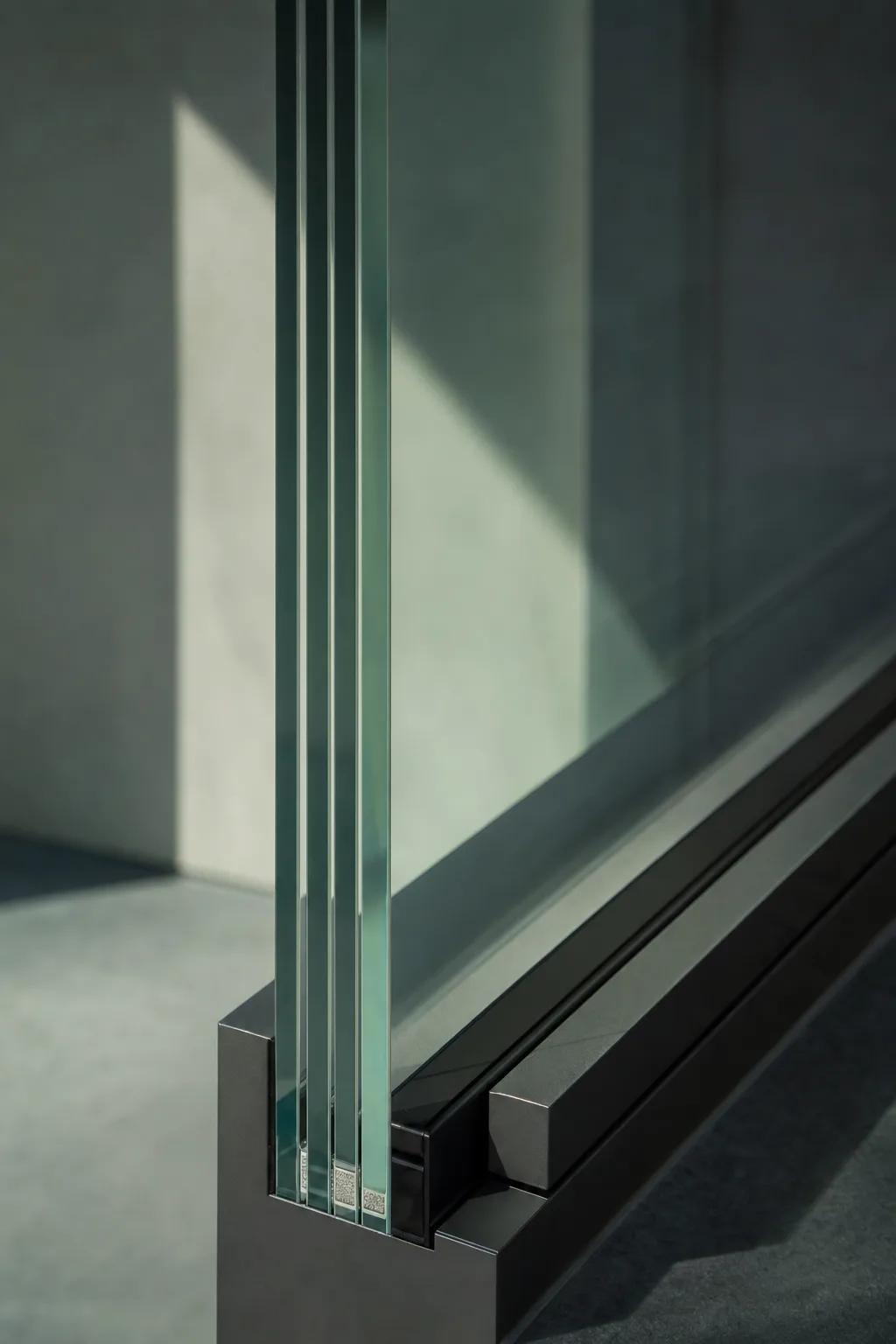
Every quality renovation starts where energy is lost: at the building envelope, and at the windows.
June 13, 2026 / 3 min read
When energy renovation enters the conversation, public debate tends to focus on systems: heat pumps, solar panels, mechanical ventilation. All of this makes sense — but only when tackled in the right order. A high-efficiency heating system installed in a building with old, poorly insulated windows can end up consuming more energy than it saves. The logic is straightforward: first reduce the demand, then optimise the system's response.
Starting with the envelope is not an ideological choice. It is the most rational sequence in any renovation project that aims to deliver measurable, lasting results.
In a building with a poorly performing envelope, the heat generated by mechanical systems escapes through dispersing surfaces. Windows are among the most critical components: even a standard insulating glass unit offers far less thermal resistance than an insulated wall. Add to this the thermal bridging created by frames without thermal breaks, and you have a continuous pathway for heat loss that cannot be addressed by improving the heating plant alone.
This is not only a winter concern. In summer, an inadequate window system allows solar heat to enter unfiltered, increasing the thermal load on interior spaces and driving higher air-conditioning demand. Windows, in this sense, are never neutral — they work in every season, and their performance is directly reflected in indoor comfort and overall energy consumption.
Replacing windows — when done with care and method — delivers overlapping benefits: reduced thermal dispersal, improved acoustic comfort, elimination of localised thermal bridges, and better quality of natural light. These are not promises; they are the result of careful system selection, glass unit quality, subframe sizing, and installation expertise working in combination.
The critical element, frequently underestimated, is the installation itself. A technically advanced window system installed carelessly will not achieve the performance it was designed for. Losses migrate from the glass to the joints, from the joints to the wall connection. This is why, in any quality renovation, window replacement must be evaluated not only as a product choice but as an integrated intervention — one that encompasses the subframe, the technical node, sealing materials, and coordination with other site activities.
An aspect often overlooked in superficial cost-benefit analyses is longevity. Thermally broken aluminium has a service life measured in decades, with modest routine maintenance requirements and performance that does not degrade over time as with other materials. Choosing an aluminium-wood system means combining the structural precision of aluminium with the warmth and naturalness of exposed wood — and with a lifespan compatible with long-term planning horizons.
Sustainability, in this context, is not a claim: it is an intrinsic characteristic of choosing durable, recyclable materials that support long-term maintenance. Aluminium is among the most recyclable metals available, and this is a general property of the material worth factoring into any informed selection process.
Energy efficiency is often discussed purely in terms of cost savings or emissions reduction. These are legitimate considerations, but they risk making abstract something that is, above all, physical and everyday. Indoor comfort — uniform surface temperatures, absence of cold draughts near windows, quality of natural light, quietness — is the most immediate and tangible benefit of a well-executed renovation. A new-generation window system improves these parameters directly and measurably, independent of any incentive or regulatory requirement. It is a value intrinsic to the intervention, experienced every single day. This is perhaps the most compelling reason to approach envelope renovation with real ambition rather than minimum compliance.
PURASISTEMI systems are built for exactly this context: an integrated approach that treats product, installation, subframe, and technical node as parts of a single quality project. To explore available systems, visit purasistemi.com.
PURASISTEMI is a Fasal Lab brand
Via delle industrie 8
30020 Eraclea
Venice - Italy
commerciale@purasistemi.comwww.purasistemi.comFollow us:
InstagramFasal Lab srl - IT 04725180279
Privacy PolicyWebsite Design: Factory42 - Development: MOBA Digital Studio