Windows and Home Automation: The Case for Discreet Integration
The smart home grows around its openings. How the window system becomes part of an increasingly connected domestic ecosystem.
June 13, 2026 / 4 min read
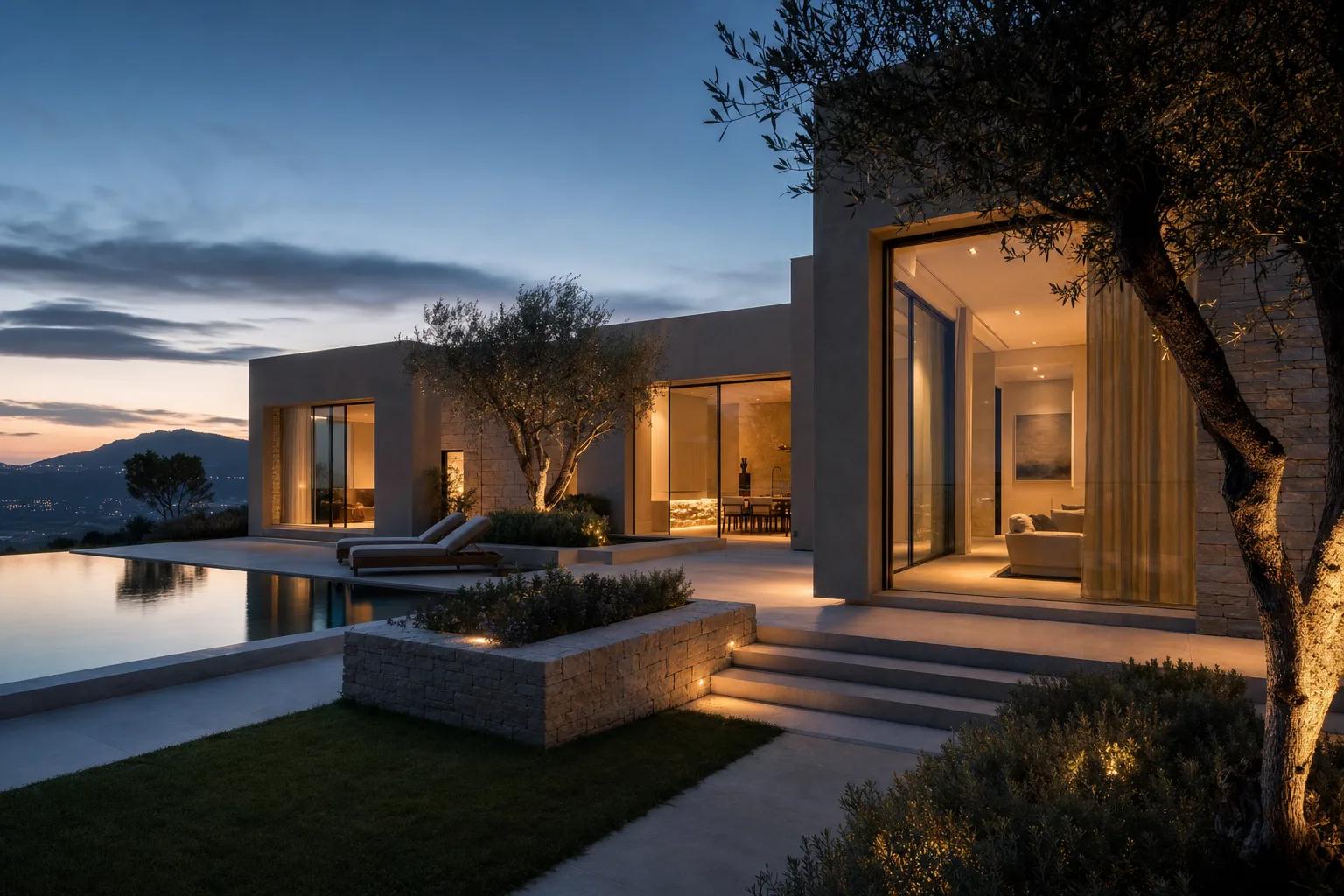
The smart home grows around its openings. How the window system becomes part of an increasingly connected domestic ecosystem.
June 13, 2026 / 4 min read
The intelligence of the home is increasingly expressed through its openings. Blinds that adjust to solar radiation, ventilation systems that respond to air quality readings, automations that manage access and security: over recent years, the window has become one of the principal nodes of the domestic home automation ecosystem. No longer simply a component of the building envelope, it has become an interface between interior space, external environment and the building management system.
This shift has not been abrupt, nor has it affected all market segments equally. In the premium residential sector — where design quality and spatial coherence are primary values — the integration of home automation and window systems has followed a slower, and in a sense more demanding, path: technology must be present but not intrusive, functional but invisible, connected but consistent with the aesthetic quality of the spaces.
Industry analysis and observable trends in high-end residential projects point to growing demand for integration between automation systems and building envelope components. The most widespread applications include:
In all these cases, the common denominator is discretion: technology must disappear into the architecture, just as the window system itself does. Concealed motors, cabling integrated into the wall build-up, controls that blend with surfaces. The concept of the smart home applied to quality living is not a technological display, but an extension of the comfort and control logic that has always guided the design of domestic spaces.
The integration of home automation and window systems poses a precise design challenge: how to incorporate motors, cabling, sensors and actuators into a building system whose primary objective is the elimination of every visible element? The answer is not straightforward, and it requires the selection of automation components to happen in parallel with the selection of the window system — not as an afterthought.
When automations are added to an already defined construction system, the risk is that the technological components emerge visually — clamps, cables, motor tracks — compromising the aesthetic quality that the window was chosen to deliver. By contrast, when integration is designed from the outset, components can be embedded within the wall layers, housed within the subframe, or concealed inside the profiles, maintaining the visual coherence of the entire system.
This principle applies with particular force to high-integration window systems, where the visual continuity between wall, frame and glass is a declared objective: every element that breaks this continuity — however technically necessary — requires a specific, considered design solution.
In premium living, home automation technology does not replace the material and constructive quality of the window system: it accompanies it. A high-performance window with thermally broken profiles and triple glazing already provides a level of comfort that no automation can substitute: the silence, the weathertightness, the quality of the air that enters and the passive thermal control. Home automation adds to this baseline an additional layer of control and personalisation, which can further enhance comfort and reduce energy consumption over time.
The observable trend is one of increasingly seamless integration: home automation systems that learn from the occupants' behaviour, that coordinate with weather forecasts, that optimise comfort across every season without requiring continuous manual intervention. But this fluidity is only achievable when the construction system — window, subframe, installation, finishes — has been designed with the same attention to detail given to the selection of the technological devices.
PURASISTEMI is designed to integrate into the architecture with coherence and discretion. To explore the characteristics of the systems and their application possibilities, visit purasistemi.com.
PURASISTEMI is a Fasal Lab brand
Via delle industrie 8
30020 Eraclea
Venice - Italy
commerciale@purasistemi.comwww.purasistemi.comFollow us:
InstagramFasal Lab srl - IT 04725180279
Privacy PolicyWebsite Design: Factory42 - Development: MOBA Digital Studio