Triple glazing: what actually changes
Thermal insulation, weight, light transmission and acoustic comfort: when triple glazing is the right choice and when double glazing is sufficient.
June 13, 2026 / 4 min read
Thermal insulation, weight, light transmission and acoustic comfort: when triple glazing is the right choice and when double glazing is sufficient.
June 13, 2026 / 4 min read
Triple glazing is not a new technology, but in recent years it has become an increasingly established reference in the quality residential segment. Its growing adoption responds to a genuine demand: greater thermal insulation, improved comfort in colder climatic zones and performance levels that anticipate progressively tightening regulatory requirements. But choosing triple glazing requires understanding what it brings — not only its advantages, but the technical implications and the conditions in which the choice genuinely makes sense.
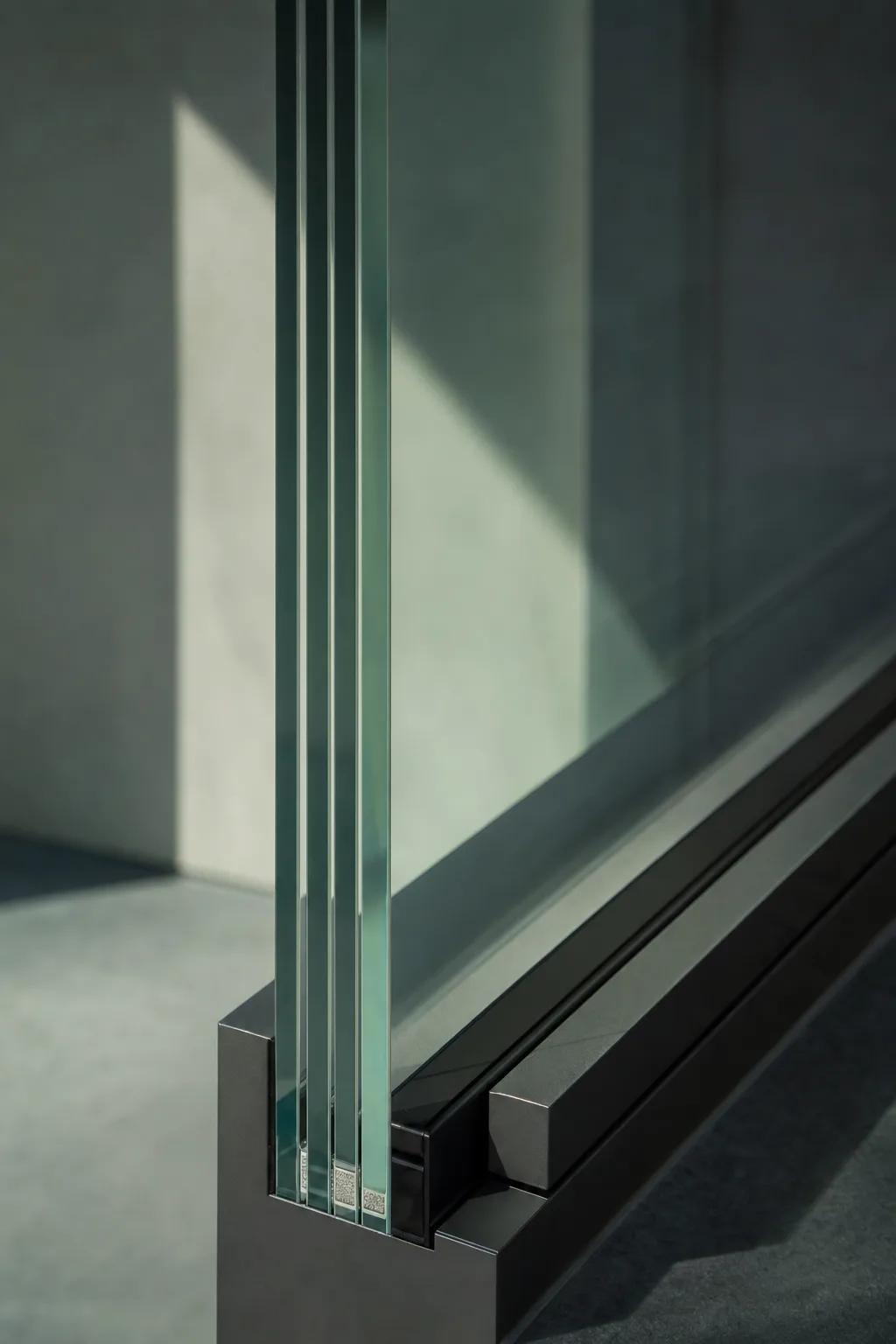
A triple-glazed unit consists of three glass panes separated by two cavities filled with gas, typically argon or krypton. Compared to double glazing, it adds a layer of insulation that reduces heat flow between interior and exterior. This translates into a significantly lower Ug value — glass transmittance — than conventional double glazing. In optimised configurations, with high-density gas and low-emissivity coatings on multiple panes, very low Ug figures can be achieved.
The primary benefit of triple glazing is thermal. The interior glass surface remains warmer than in a double-glazed unit, even on the coldest winter days. This reduces the phenomenon of "cold radiation" — the discomfort perceived in areas close to windows when the cold radiating surface of the glass interacts with the room air. Perceived comfort improves even without significant changes in air temperature: this is an effect of thermal quality, not simply energy saving.
In PURASISTEMI systems, the Battente is configured with triple glazing at a total thickness of 57 mm. Configuration examples such as Uw 0.94 W/m²K on a single-sash window of 1000×1500 mm with Ug 0.5 glass show how the combination of optimised triple glazing and thermally broken frame can achieve significant performance levels. As always, these are configuration examples: the final result depends on dimensions, the specific glass unit and installation conditions.
Triple glazing is heavier than double glazing. This is a technical fact that affects several aspects of the system: the window structure must be dimensioned to carry the additional weight, hinges must deliver the same smooth operation with greater mass, and site logistics become more demanding. In the PURASISTEMI Battente system, the concealed hinges with translating and offset rotation handle panels up to 150 kg — a characteristic that directly addresses the demands introduced by triple glazing in generous formats.
For the sliding systems, glass weight is an even more determining factor: the height-adjustable rollers and the sliding mechanism are dimensioned for panels of considerable weight, including triple-glazed configurations. The load-bearing capacity of the rollers — up to 800 kg per panel in double-carriage configuration — indicates the design scale the system is built for.
Each glass pane absorbs and reflects a proportion of light. A triple-glazed unit, having three panes rather than two, has slightly lower light transmission than a comparable double-glazed unit. This does not mean that triple glazing is dark — with optimised coatings, light transmission values remain high — but it is an aspect to consider in the design of interior spaces, particularly when the quality and quantity of natural light are central to the project.
In the PURASISTEMI Battente system, the example light transmission figure is 74%, a value that preserves interior luminosity. The design of orientations and opening dimensions remains the primary instrument for optimising natural light, and triple glazing enters this reasoning as a variable to be calibrated rather than ignored.
Triple glazing is the most appropriate choice when the building is in a cold or very cold climatic zone, when regulatory requirements — progressively increasing — mandate it for renovation or new construction interventions, when thermal comfort near glazed surfaces is a design priority, or when the aim is to build an envelope with high and enduring performance over time.
In temperate or mild climatic contexts, an optimised double-glazed configuration may be sufficient to meet regulatory requirements and ensure good comfort. The choice must be evaluated case by case, considering climatic zone, orientation, opening dimensions and the objectives of the project.
In PURASISTEMI, the availability of triple glazing as the standard configuration in the Battente system reflects a deliberate technical choice: to offer performance adequate for the most demanding requirements without designers or clients needing to specify subsequent upgrades. Discover the glazing configurations available at purasistemi.com.
PURASISTEMI is a Fasal Lab brand
Via delle industrie 8
30020 Eraclea
Venice - Italy
commerciale@purasistemi.comwww.purasistemi.comFollow us:
InstagramFasal Lab srl - IT 04725180279
Privacy PolicyWebsite Design: Factory42 - Development: MOBA Digital Studio